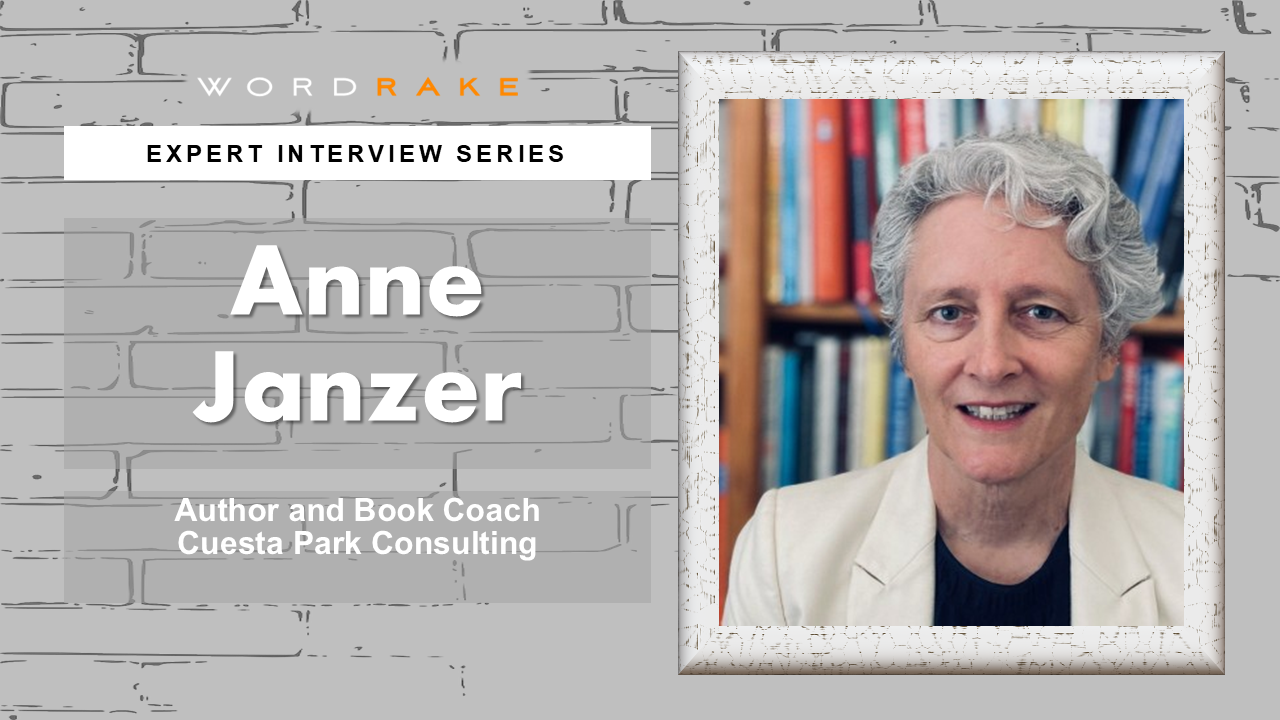
We usually collaborate with Anne Janzer as an author, so this is an exciting opportunity to get to know Anne from a different perspective. Since Anne is well-established as an author and an editor, she’s uniquely positioned to help us understand how editors work with authors—and how to know what type of editing services you might need. If you’ve ever been confused about what editors do, you’ll find this interview illuminating.
What is your role and how are you involved in editing?
I’m a book coach who works with nonfiction authors. In that role, I often provide high-level editing for structure and flow. I’ve also written several books about writing, and worked as a professional freelance writer in the technology industry. So, I’ve spent a lot of time working with editors.
If someone is already a good writer, why would they need an editor?
We all live in our own heads. Editors offer valuable outside perspectives. They can advocate for the unseen reader, letting us know where they may get lost or confused. And they see what’s really on the page, not what our brains tell us is there!
The best editors make us better writers. A friend who has written a series of thrillers reports that working with his editor on his first four books was like getting a Master’s Degree in writing.
What are the different types of editing?
So glad you asked! While many people think of editing as a single function, it’s much more.
In the book publishing world, editors fill diverse roles.
- Developmental editors work at the highest level, looking at the structure and content.
- Line editors work on the flow of the writing and the written voice.
- Copyeditors examine the words for grammar and conventions, mistakes, and clarity.
- Proofreaders scrutinize the work in its final layout, looking for formatting issues as well as pesky typos and other problems that snuck through.
While many editors can perform two of those levels well, it’s a rare individual who can master all.
How do people know what kind of editing they need?
Outside the publishing world, editors don’t always use these labels. It is up to you (if you’re the writer) to know what kind of editing you need.
Consider your strengths and weaknesses and what you’re trying to achieve with the piece.
Do you want the voice to sound more professional or authoritative? Look for a line editor. If you’re stuck halfway through a first draft of a long piece, a developmental or structural editor might save you. If you want to make sure it’s as professional as possible, engage a copyeditor.
Get an in-house editor at your fingertips for 40 cents a day.
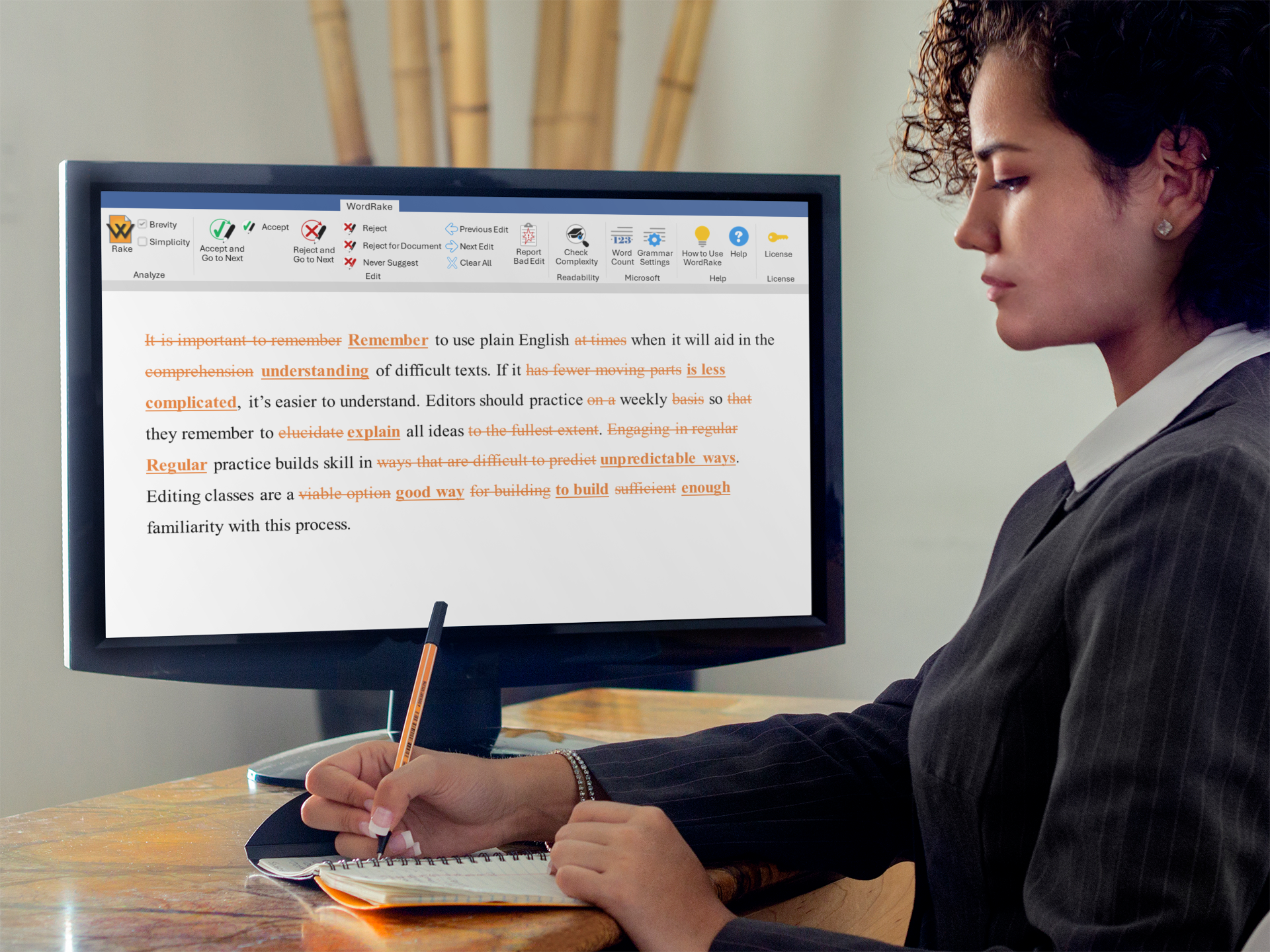
WordRake editing software is a second pair of eyes to help polish your writing.

At what point in the writing process should someone reach out to an editor?
For structural or line editing, reach out early, when you have a working draft (or even half of one). The guidance you receive may influence the rest of the draft.
Engage a copyeditor when you’ve completed and polished a draft. Yes, the copyeditor can do basic cleanup for you, but you’ll get their best work if you fix the obvious issues first. And, you’ll usually save money this way.
For shorter or online works, copyediting and proofreading can be combined—although, making significant edits to a piece often introduces new typos!
(Keep time in your schedule to enlist professional help! Your project should never be someone else’s crisis.)
Is there a difference between editing fiction and nonfiction? Do editors specialize in certain genres?
It depends on the level of editing. A good proofreader should be able to work across all genres, although books have different style conventions than web page copy. Developmental editing (at the higher, structural level) often requires genre-specific expertise.
Human editors enjoy and prefer specific genres, too. I would look for people who work in your broad genre (like business or memoir) because they need to understand your reader’s expectations. But don’t be too specific. One author told me she would only hire a developmental editor who had experienced the exact trauma that was the subject of her book. That too-specific requirement weeds out many people who could help her book.
How do you find the right editor to work on your project?
The first step is knowing clearly what you want from the editor. Do you want a companion as you write and revise the work? Structural guidance? Help with voice? A check at the end?
Then, get recommendations. And whatever you do, let the people you’re vetting know where you are in the process and what you need.
Nothing ruins an editor/writer relationship faster than mismatched expectations.
For a longer work like a book, you might pay for a short sample edit (for everything except a developmental edit). Their suggested edits should never change the meaning or your essential voice in the piece—it should sound like the best version of you.
Whether you’re hiring a pro or enlisting a colleague, be quite clear on where you are in the process and what you’re looking for. Everyone will be happier as a result!
About Anne Janzer
Anne Janzer is a nonfiction book coach and author of several books about writing, including The Writer’s Process, The Writer’s Voice, and Writing to Be Understood. Her books have been translated into multiple languages and adopted for college writing courses. The science and mystery of writing fascinate her, and is always searching for clues to better communication. Find her books and blog posts at AnneJanzer.com.
About the Editor Interview Series
WordRake is an automated editing add-in for Microsoft Word and Outlook. Our editing algorithms are created by linguists and subject matter experts to offer nuanced suggestions to improve clarity and cut wordiness in your documents. But we know that software is only the start of your editing process! To help writers understand more about editing and the considerations that go into it, we’ve enlisted several of our favorite professional editors to share their experience and wisdom. Learn from the best about the importance of great editing—and then go try WordRake for yourself!
Transform your legal briefs from good to great with a sophisticated style editor.
Your writing is essential to your legal practice. Let WordRake help you create clear, concise writing.